
Nonviolent Communication
Space for Conversation, Listening, and Clarity
A Space for Conversation, Listening, and Clarity
A practical and personal space that allows you to pause and listen deeply
to identify feelings and unmet needs, and practice a new way to express what matters to you
The aim is to create mutual listening between everyone involved
and understand the needs within the deeper layers of the conversation
- Personal session, two people, or a small group
- In person in Yafe Nof, Pardes Hanna, or on Zoom
- By donation, according to your wishes and ability
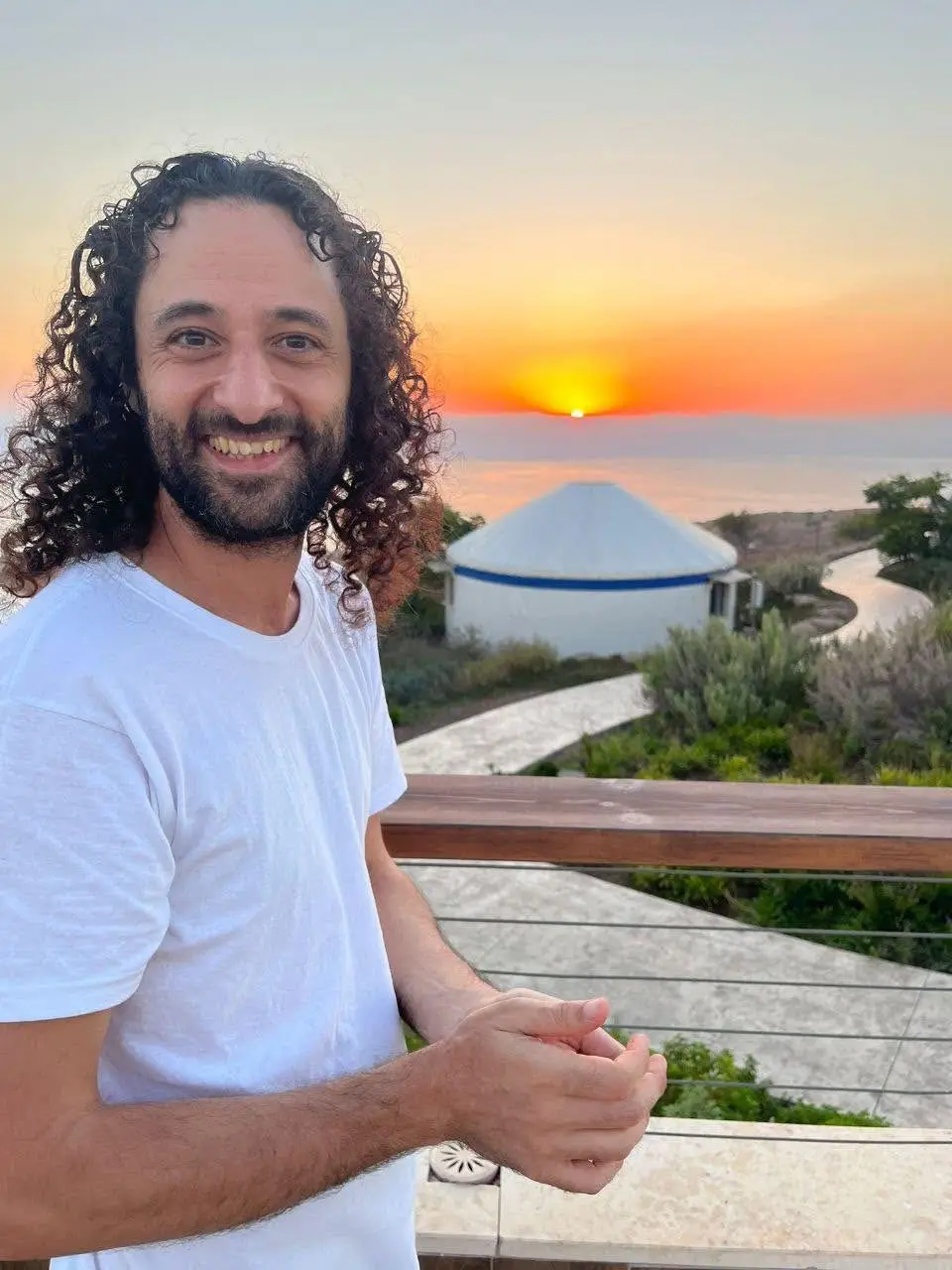
Practical practice • Deep listening
When might this session be right for you?
When you want to create more listening, clarity, and connection in a meaningful conversation
Before a sensitive conversation
Prepare for an important conversation and find a clear, compassionate way to express what matters to you
When the same issue keeps returning
Meet a meaningful issue in a new way, with curiosity and a desire to understand what is asking for attention
To express a need clearly
Identify what truly matters to you and practice phrasing a request that can be heard and understood
To understand what lies beneath an emotion
Move beyond the first words and connect with the deeper needs underneath
To create mutual listening
Practice a conversation where what matters to each person has space, at a calm and respectful pace.
To strengthen closeness and clarity
Develop language that supports connection and helps you meet challenges and differences with greater understanding
The language behind the practice
What is Nonviolent Communication?
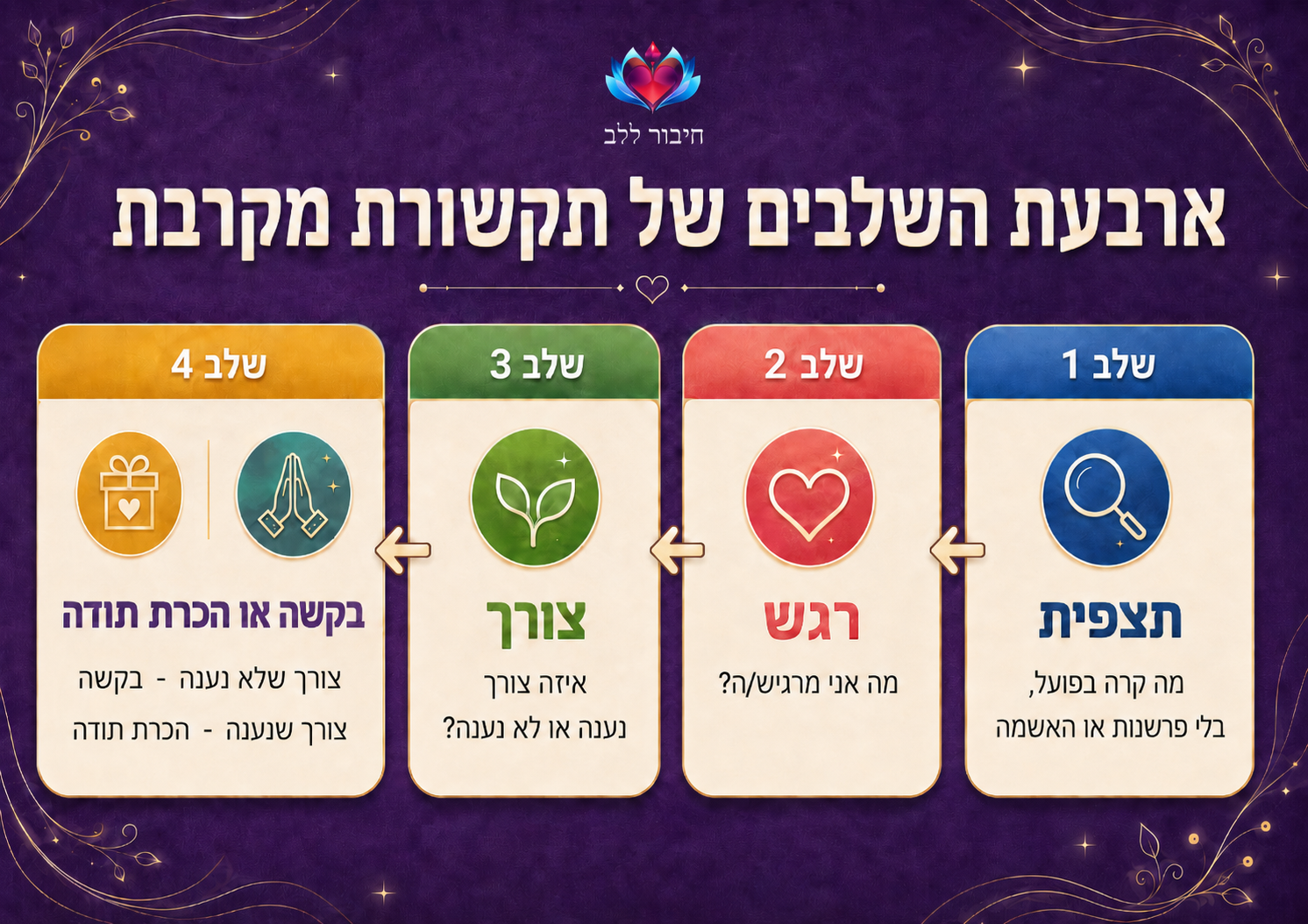
Nonviolent Communication is a way of listening and speaking from a connection with what is happening within us. We look at what happened in practice, what we are feeling, which need is asking for attention, and what request or expression of gratitude can grow from it. In the session, we practice this language through real situations from everyday life, in a simple, practical, and respectful way.
Step 1
Observation
What happened in practice, without interpretation or blame
Step 2
Feeling
What am I feeling when I meet what happened?
Step 3
Need
Which need was met or unmet beneath the feeling?
Step 4
Request or gratitude
A request when a need is unmet. Gratitude when a need is met.
Examples from everyday life
How can a conversation sound different?
In the session, we practice simple wording that helps express feelings, needs, and what matters to us clearly, creating more listening, connection, and mutual understanding.
Sharing household tasks
Words that come from overwhelm
Everything at home always falls on me
A connecting expression
When I see the dishes in the sink at the end of the day, I feel overwhelmed. Partnership and clarity matter to me. Could you tell me when it would be convenient for you to wash them?
A conversation with a family member
Words that come from pain
You are not really listening to me
A connecting expression
When I share something personal and the subject changes quickly, I feel alone. It matters to me to feel there is space for what I bring.
Coordinating expectations at work
Words that come from pressure
It is hard to understand what you want from me
A connecting expression
When I receive several tasks at once without an order of priority, I feel pressured. Clarity and focus matter to me. Could we choose together what comes first?
What happens in the session
Live practice with real situations
In the session, we bring a conversation, challenge, or difference from real life and practice a new way to listen, understand, and express what is in the heart.
Practice is at the heart of the session
The practice lets us pause, listen to what lies beneath the words, and express a feeling, a need, and a clear request.
- Working with real situations
- Identifying feelings and needs
- Formulating clear requests
- Practicing deep listening
01
Bring a situation from everyday life
Choose a conversation, challenge, or difference you would like to meet with greater clarity and listening.
02
Listen to what lies beneath the words
Identify feelings, needs, and deeper layers that are asking for attention.
03
Practice connecting language
Connect observation, feeling, and need, then phrase a request that can be heard and understood.
04
Leave with a way forward
Finish with clarity, an insight, or a sentence you can take into the next conversation.
Session options
Individual session, a session for two, or a small group
You can come for a single session or a short series of sessions, according to your needs, pace, and what is asking to become clearer.
Individual session
A personal space to look at a conversation, challenge, or difference that concerns you, and to practice a new way of expressing what matters.
- Preparing for a meaningful conversation
- Identifying feelings and needs
- Formulating a clear request
Small group
A session for up to four participants, around a shared topic or a wish to practice Nonviolent Communication together.
- Up to four participants
- A shared practice space
- A calm and respectful pace
A session for two people
Suitable for partners, family members, friends, or colleagues who want to create more listening and clarity between them.
- Listening to both people
- Practicing connecting language
- Creating a shared language
Sessions take place in person in Yafe Nof, Pardes Hanna, or on Zoom with the camera on.
About Lior and his connection to this language
A language lived in everyday life, beyond the session
Lior first met the language of Nonviolent Communication in the home where he grew up. His father, Shlomo Bourla, an organizational consultant and group facilitator, took part in a two year facilitator course in Nonviolent Communication in the 1990s and integrated tools from the approach into his work with groups and communication workshops. Later, Lior deepened his own path through study, lectures, and consistent, conscious practice since 2017. For him, it is a way to listen, think, and create more meaningful conversations.
Nonviolent Communication is a language built through ongoing practice
This is also one of the central messages Lior received from his father: for the language to feel natural, it is important to practice it again and again in everyday life.
Practical details
How does the session take place?
Everything you need to know before scheduling a session: location, length, payment, and the space that supports the practice.
Where do we meet?
In Yafe Nof, Pardes Hanna, or on Zoom with the camera on.
Session length
The session length is flexible and set according to the need. Most sessions last about one to one and a half hours.
A heartfelt contribution
The session is offered in the spirit of Dana, a contribution according to your wishes and ability.
A protected room is available
A safe room is available and easy to access in the house, so we can feel secure and at ease.
Important to know
The session offers guidance and practical practice in Nonviolent Communication. It is suited to complex conversations, challenges, and differences that can be met with listening, goodwill, and a readiness to practice. Lior shares tools and personal experience gathered through years of learning and everyday application. The session is not a substitute for emotional therapy, couples therapy, professional mediation, or other appropriate professional support. When deeper therapeutic or professional care is needed, it is best to contact a qualified professional.
Tools for the road ahead
Continue practicing after the session
During the session, we will explore simple tools for identifying feelings, understanding needs, and practicing the four steps of Nonviolent Communication in future conversations.
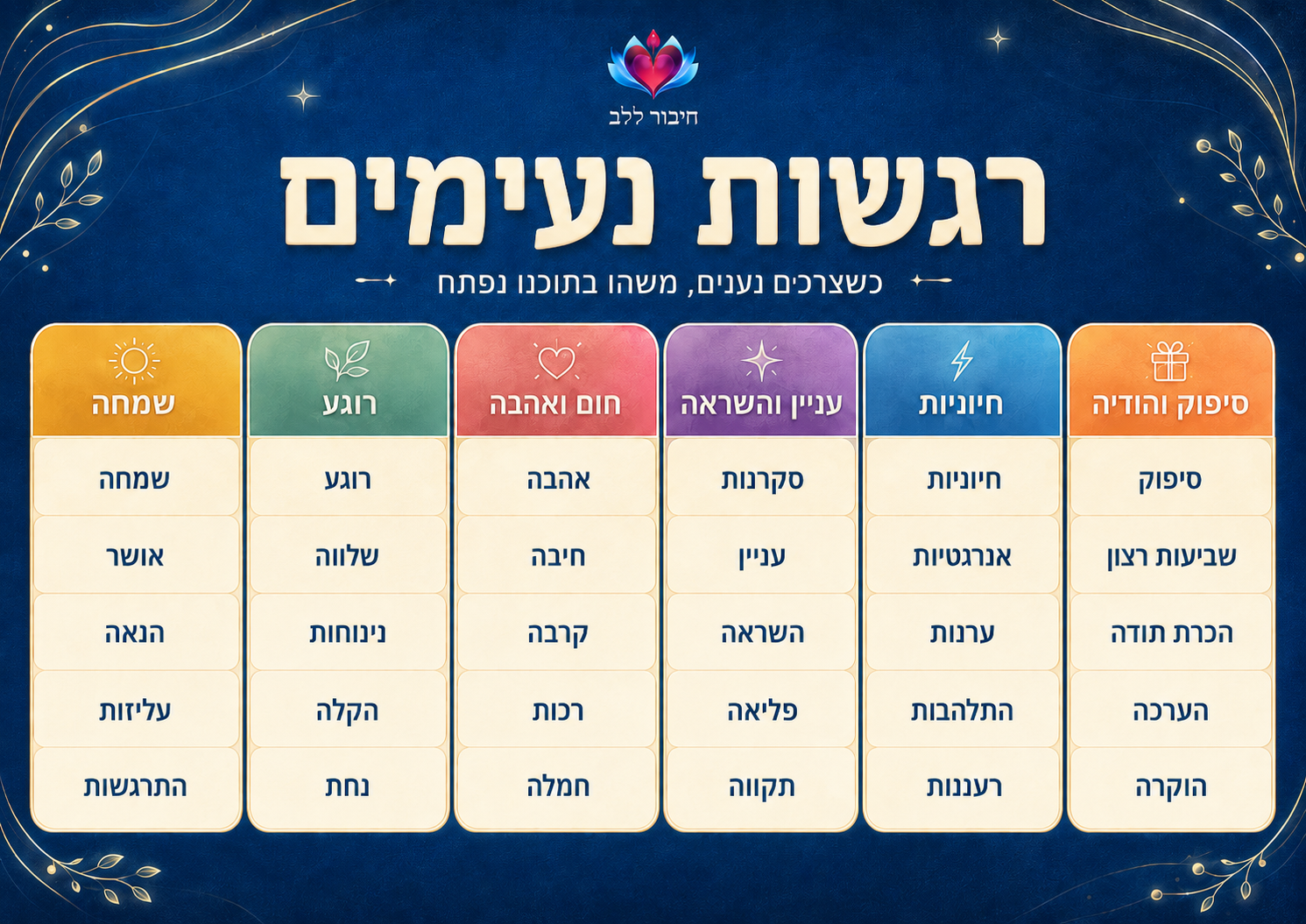
Pleasant feelings
A tool that helps identify pleasant feelings and notice what feels alive, nourishing, and strengthened within us.
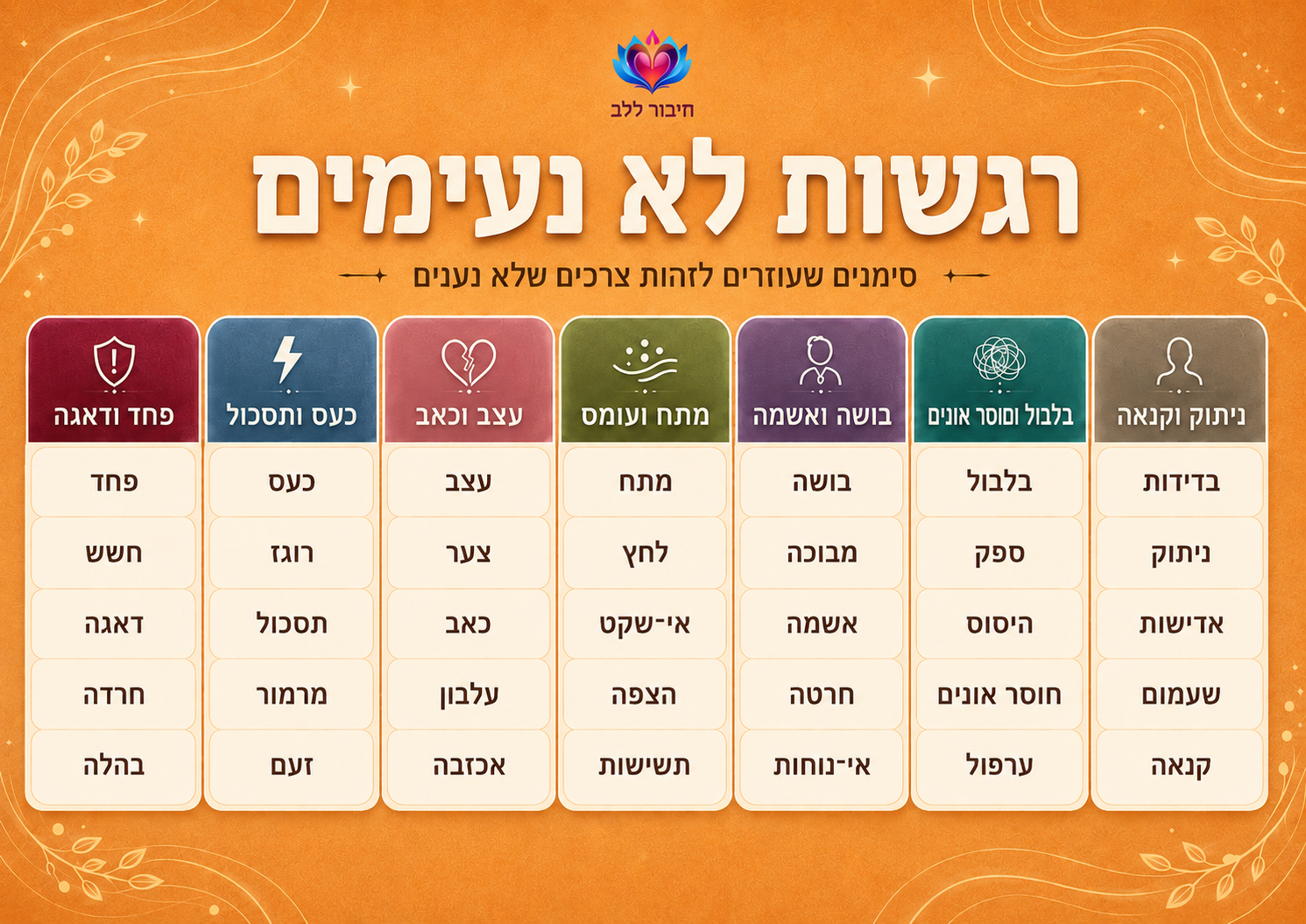
Unpleasant feelings
A tool that helps identify unpleasant feelings and understand what is asking for attention within us.
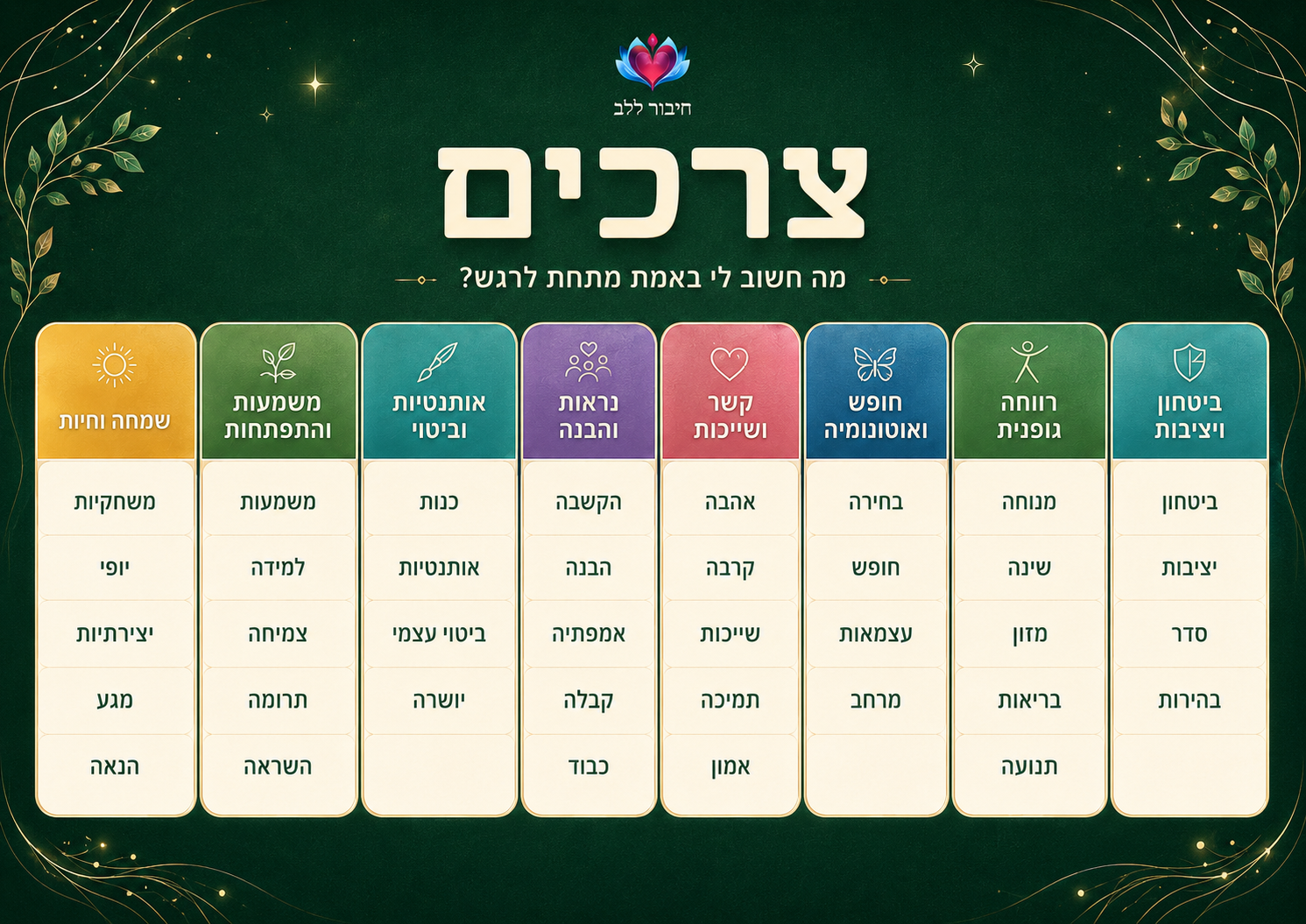
Needs map
A tool that helps understand which needs have been met and which needs are asking for attention.
The four steps
A simple way to practice observation, feeling, need, and a request or expression of gratitude.
Pleasant feelings, text version
When needs are met, something within us opens. Joy: joy, happiness, pleasure, cheerfulness, excitement. Calm: calm, peace, ease, relief, contentment. Warmth and love: love, affection, closeness, tenderness, compassion. Interest and inspiration: curiosity, interest, inspiration, wonder, hope. Vitality: vitality, energy, alertness, enthusiasm, freshness. Fulfillment and gratitude: fulfillment, satisfaction, gratitude, appreciation, recognition.
Unpleasant feelings, text version
Signals that help identify needs that have not been met. Fear and worry: fear, concern, worry, anxiety, alarm. Anger and frustration: anger, irritation, frustration, resentment, rage. Sadness and pain: sadness, grief, pain, hurt, disappointment. Tension and overload: tension, pressure, restlessness, overwhelm, exhaustion. Shame and guilt: shame, embarrassment, guilt, regret, discomfort. Confusion and helplessness: confusion, doubt, hesitation, helplessness, uncertainty. Disconnection and jealousy: loneliness, disconnection, indifference, boredom, jealousy.
Needs map, text version
What truly matters to me beneath the feeling? Safety and stability: safety, stability, order, clarity. Physical wellbeing: rest, sleep, nourishment, health, movement. Freedom and autonomy: choice, freedom, independence, space. Connection and belonging: love, closeness, belonging, support, trust. Being seen and understood: listening, understanding, empathy, acceptance, respect. Authenticity and expression: honesty, authenticity, self expression, integrity. Meaning and growth: meaning, learning, growth, contribution, inspiration. Joy and aliveness: playfulness, beauty, creativity, touch, pleasure.
The four steps, text version
Step 1, Observation: What happened in practice, without interpretation or blame. Step 2, Feeling: What am I feeling? Step 3, Need: Which need was met or unmet? Step 4, Request or gratitude: an unmet need leads to a request, and a met need leads to gratitude.
Frequently asked questions
What is helpful to know before scheduling?
A few short answers to help you understand whether the session is right for you and how it works in practice.
Can I come on my own?
Yes. You can come even when the complex conversation is with another person. In an individual session, we will practice understanding more clearly what is happening within you and expressing what matters in a clear and connecting way.
Who is a session for two suitable for?
The session is suitable for partners, family members, friends, or colleagues who want to create more listening, clarity, and connection in the conversation between them.המפגש מתאים לבני זוג, בני משפחה, חברים או שותפים לעבודה,
שרוצים ליצור יותר הקשבה, בהירות וחיבור בשיחה ביניהם.
How long is a session?
The session length is flexible and set according to the need and the number of participants. Most sessions last about one to one and a half hours. A small group session may take longer so everyone has a calm and respectful space.
What does Dana mean?
Dana is a contribution according to your wishes and ability. At the end of the session, you can choose the amount that feels right for you and fits your means.
Do I need to know Nonviolent Communication beforehand?
No prior knowledge is needed. The session is simple and practical, with a short explanation and practice through real life situations.אין צורך בידע מוקדם. המפגש בנוי בצורה פשוטה ומעשית,
עם הסבר קצר ותרגול דרך סיטואציות מהחיים.
When is it helpful to also contact a professional?
When deeper therapeutic, relationship, emotional, or professional support is needed, it is best to contact a qualified professional. The session with Lior offers guidance and practice in Nonviolent Communication, based on personal experience and tools learned over the years.
Ready to practice a different kind of conversation?
A space for conversation, listening, and clarity
You can schedule an individual session, a session for two, or a small group, and practice Nonviolent Communication together through real situations from everyday life.